By Sanjay Tripathy
Bihar has spent decades fighting a battle of perception. Too often, the state’s progress gets overshadowed by stories of shortcomings, political controversies and governance challenges. The answer to this negative narrative, however, is not another slogan. The most effective answer is visible development on the ground.
If roads improve, industries arrive, tourists increase and young people find jobs within the state, the perception of Bihar will change automatically.
This is why the emerging focus of the Samrat Chaudhary government on industry, tourism and employment deserves attention. These are not three separate priorities. Together, they can form the new economic Trinity of Bihar.
The development story of Bihar can no longer be restricted to roads, bridges and government schemes. Infrastructure remains essential, but the next phase must be about investment, production, enterprise, tourism and jobs.
Investment Must Become Reality
The target of attracting ₹5 lakh crore of investment through the PPP model is undoubtedly ambitious. But announcing an investment target is only the beginning. The real test will be how much of this proposed investment actually reaches the ground.
For an investor, Bihar must offer more than incentives. There must be reliable electricity, industrial land, good roads, efficient logistics, skilled manpower and predictable administrative processes.
The proposed objective of making 20,000 MW of electricity available for industries over the next five years is therefore particularly important. Reliable power is not simply an energy-sector requirement; it is the foundation on which industrial confidence is built.
Bihar has another major advantage—its agricultural economy.
Maize, makhana, litchi, banana and other agricultural products provide enormous opportunities for food processing and value addition. Textiles, pharmaceuticals, electronics and other manufacturing sectors can create new economic centres across the state.
But Bihar should not measure industrialisation only by the number of large companies it attracts. The real success will come when large industries create opportunities for thousands of MSMEs, suppliers, transporters and local entrepreneurs.
That is when industrial investment will begin to transform the villages and towns of Bihar.
Tourism Can Become a Major Economic Engine
The second pillar is tourism.
Bihar does not need to create a tourism identity from scratch. It already possesses an extraordinary heritage.
Bodh Gaya, Nalanda, Rajgir, Vaishali, Pawapuri, Gaya, Valmiki Nagar and the state’s rich Buddhist, Jain, Sikh and Hindu heritage provide a natural tourism circuit. The Ganga adds another dimension to this opportunity.
The challenge is to convert these assets into a modern tourism economy.
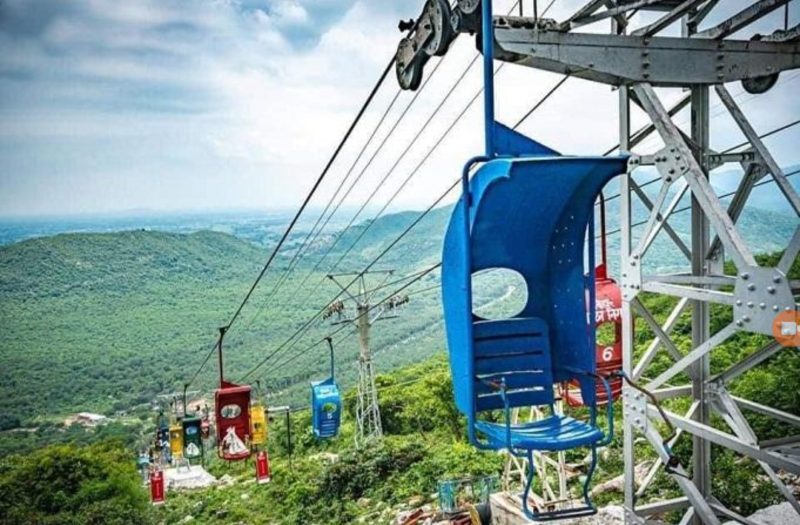
The government’s objective of developing ropeways at 20 important locations over the next two years can be an important step in this direction.
The proposed Patna-Sonepur ropeway over the Ganga, if implemented successfully, could become more than a transport facility. It could become a tourism experience in itself.
Imagine the economic ecosystem that can develop around such projects—hotels, restaurants, local markets, handicrafts, transport services, guides, entertainment and local food businesses.
This is how tourism becomes an industry.
The Final Test: Jobs for Bihar’s Youth
But there is one question that will ultimately determine whether this entire development strategy succeeds:
How many jobs will it create for Bihar’s youth?
Investment figures can make headlines. New infrastructure can change landscapes. But the real transformation will be visible when a young person in Bihar no longer feels compelled to leave the state simply in search of employment.
A ₹5 lakh crore investment programme must therefore be linked to a clear employment strategy.
Local youth should receive skill training. Local entrepreneurs should get opportunities. MSMEs should be integrated into industrial supply chains. Tourism destinations should become centres of local enterprise.
A hotel does not employ only its staff. It creates business for taxi drivers, guides, shopkeepers, food vendors, photographers, handicraft sellers and transport operators.
Likewise, an industrial plant creates an ecosystem of suppliers, logistics companies, service providers and ancillary units.
The multiplier effect of investment is therefore more important than the investment figure itself.
From Government Spending to an Investment Economy
Bihar now stands at an important juncture.
The targets of ₹5 lakh crore investment, 20,000 MW of power availability and ropeways at 20 major tourism destinations are ambitious. But ambition alone does not create development.
The real challenge is implementation.
Every major project should have a clear timeline, transparent PPP structure, accountability and measurable employment outcomes. The people of Bihar should be able to see what is being built, when it will be completed and what economic opportunities it will create.
Bihar needs a development model in which industry brings investment, tourism generates local economic activity and both together create employment.
That is the real Trinity.
If this model is implemented with speed, transparency and consistency, Bihar can gradually move from an economy largely dependent on government expenditure towards an economy driven by private investment, industrial production, tourism, entrepreneurship and employment.
The targets are big. The opportunity is bigger.
The time has now come to ensure that Bihar’s development story is not merely announced from government platforms, but experienced by ordinary people in their villages, towns and cities.