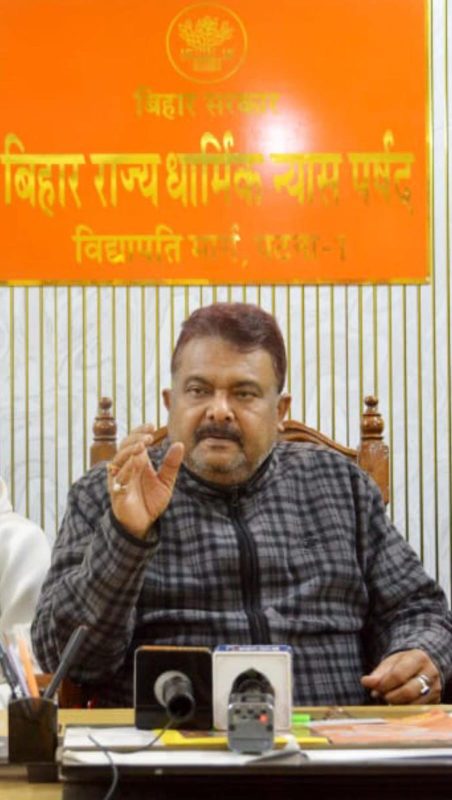
Patna: The News. Religious places in Bihar are no longer confined to being centers of worship and faith alone. They are now emerging as powerful platforms for social transformation, education, and public welfare. Under the development vision of Chief Minister Samrat Choudhary and the dynamic leadership of Prof. Ranbir Nandan, Chairman of the Bihar State Religious Trust Board, the Board has broken traditional administrative boundaries and presented an unprecedented and historic model of public service.The impact of this progressive vision was recently witnessed at the grand “State-Level Religious Trust Conclave” held at Bapu Auditorium in Patna, where more than 4,000 representatives of monasteries and temples, saints, and senior officials from across the state gathered with a collective commitment to public welfare. Inspired by Chief Minister Nitish Kumar’s vision of developing Mata Sita Dham, the Board has connected religious institutions directly with the upliftment of the poorest and most marginalized sections of society.In recent years, the Bihar State Religious Trust Board has undertaken several remarkable initiatives that have not only brought transparency to temple administration but have also directly improved the lives of ordinary people.Offerings Used for Public WelfareUnder a revolutionary policy, donations and offerings made at temples and monasteries are now being utilized for public welfare initiatives, including assistance for orphans, support for the marriage of poor girls, and various developmental programs.Education and Revival of Traditional KnowledgeTo create a cultured and self-reliant younger generation, the Board has launched self-study centers, modern libraries, and free coaching facilities within temple premises. At the same time, efforts are being made to revive Sanskrit schools and Vedic studies, preserving India’s rich traditional knowledge system.Skill Development and Women EmpowermentComputer education, vocational training, and self-employment programs are being promoted extensively to create new livelihood opportunities for women and youth.Campaigns Against Dowry and AddictionTo protect society from harmful social practices, the Board has prioritized dowry-free mass marriages and statewide anti-addiction campaigns.Environmental and Health InitiativesFree health camps, yoga centers, and Ayurveda facilities are being established in temple complexes. In addition, temple premises are being made completely plastic-free, while medicinal plant nurseries and model cow shelters are being developed.A New Dimension to Cultural Awareness and Social HarmonyThe Board has also redefined the celebration of saints and great personalities to promote social harmony and cultural pride. The grand Sant Ravidas Jayanti celebration held at Rabindra Bhavan in Patna conveyed a strong message of social unity across the state.The Board now observes the birth anniversary of former Prime Minister Atal Bihari Vajpayee as “Prakharata Diwas” and Swami Vivekananda Jayanti as “Spirituality Day” with great dignity and enthusiasm. Furthermore, through the “Somnath Swabhiman Festival,” special worship ceremonies are organized in Shiva temples across Bihar to spread historical awareness and connect people with the nation’s cultural heritage.
Service Beyond Bihar: A Remarkable Example During Chhath FestivalThe Board’s commitment and sensitivity were most visible during the grand festival of Chhath. It not only improved the condition of ghats and temples across Bihar while arranging accommodation, drinking water, and prasad facilities for devotees, but also extended its service mission to temples associated with Bihari communities in metropolitan cities such as Delhi, Mumbai, Surat, and Kolkata. This reflects the Board’s deep emotional connection with migrant Biharis.Future Roadmap with “Teerth Bhawan”The Board is now moving ahead with ambitious future plans. “Teerth Bhawans” and integrated social service centers are being developed at major pilgrimage sites. These centers will provide world-class facilities under one roof, including education, healthcare, career counseling, and women’s training programs for devotees and local residents alike.Clearly, through this beautiful blend of tradition and modernity, the Bihar State Religious Trust Board has given a new direction, energy, and remarkable height to the social and cultural landscape of Bihar. This model is now emerging as an inspiration for other states across the country.